The platform
Process Superintelligence
DecaOS turns every experiment and every batch into learning, so designing a process and running a plant finally become one loop.
DecaOS
A new model for product development and optimization
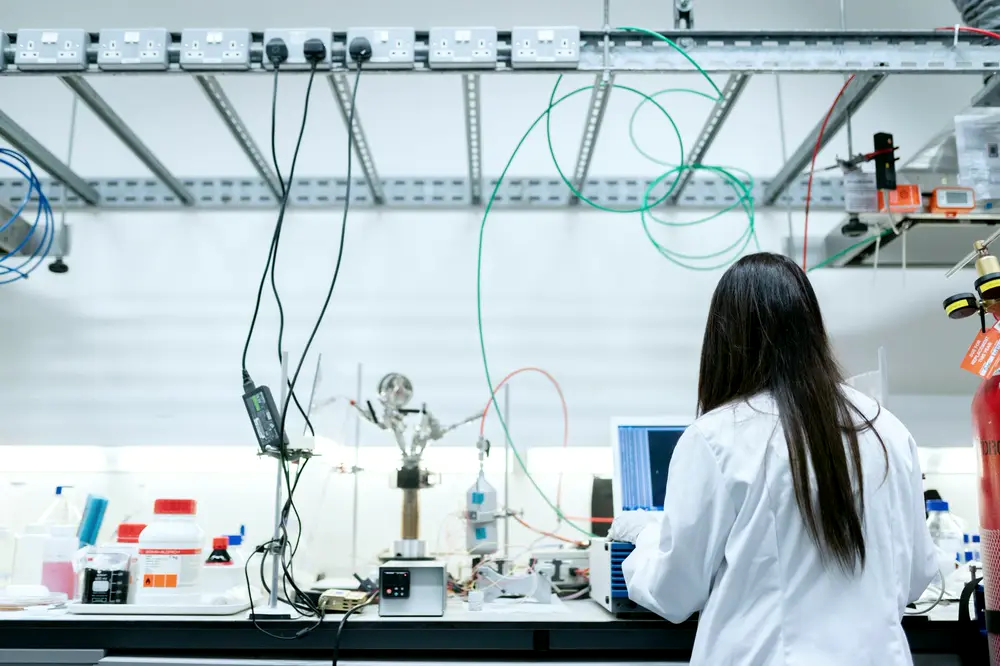
Industry is the ultimate data generator. Every batch, every deviation and every lab result creates process knowledge that has never existed before, yet most of it is never used to learn. DecaOS is trained on that knowledge, from the lab bench to the plant floor, and reasons over it the way a process engineer does: from first principles and real evidence.
How it works
Develop. Scale. Run.
ScaleScale-up
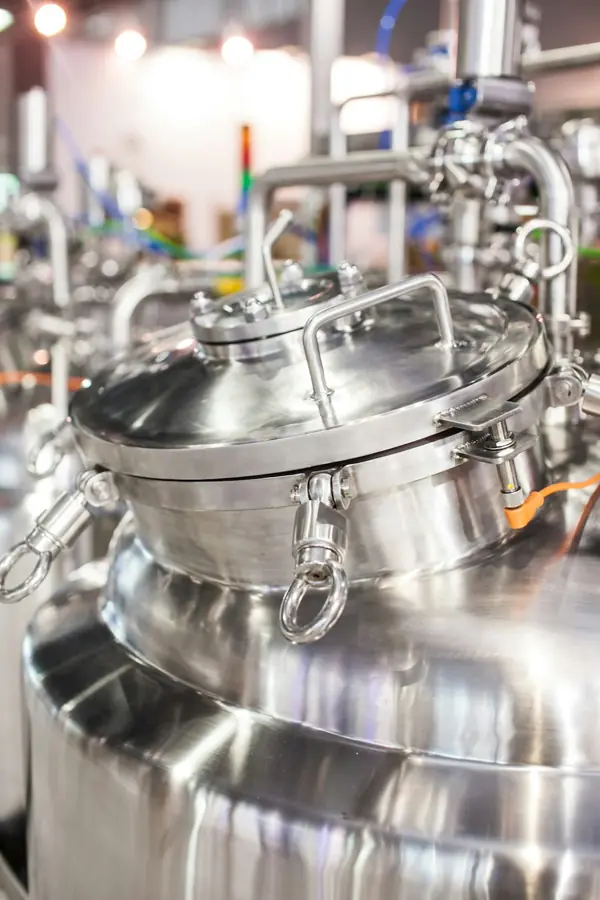
Carry what the lab learned into scale-up, so pilot runs confirm instead of starting over.
See scale-up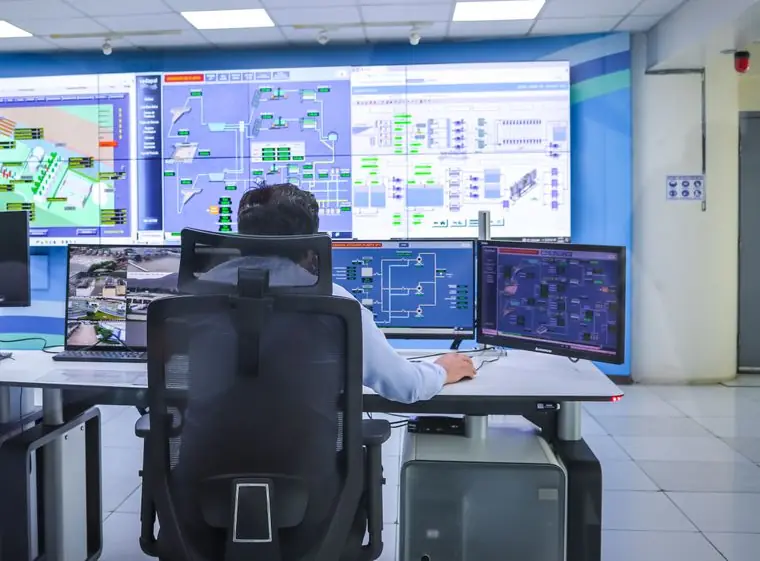
RunSelf-learning plant
Run the plant in closed loop, inside the limits your engineers set.
See the plantEach step builds on the one before. What the lab learns becomes the model the pilot tests, and every plant it runs keeps teaching it. Nothing is relearned from scratch.
Where it sits
A reasoning layer on top of what you run.
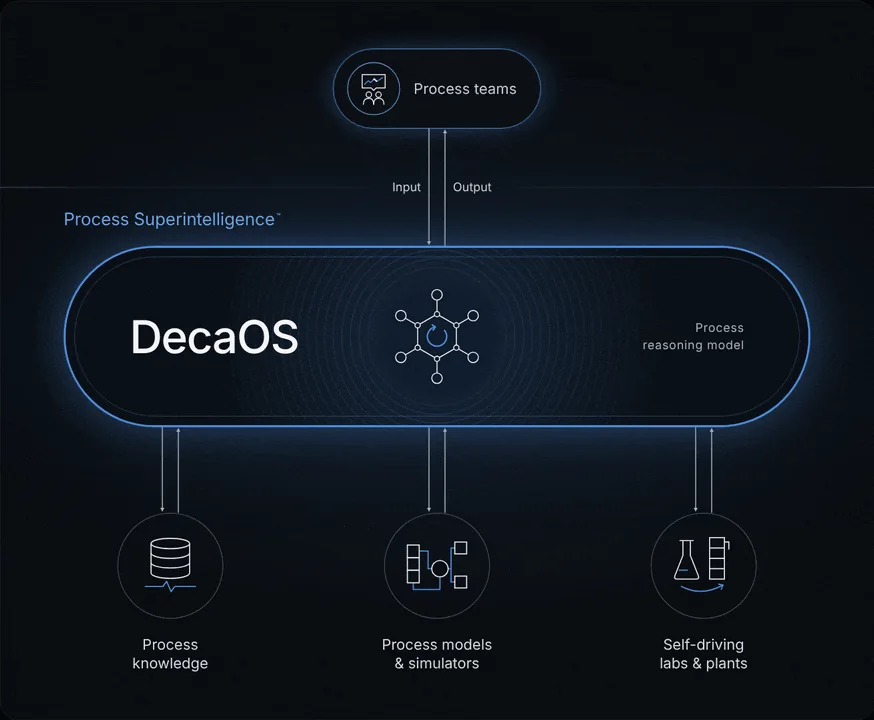
Every system in your lab and plant does its own job on its own clock. DecaOS sits on top: it reads what they measure, reasons over it, and sends back experiments and setpoints within the limits your engineers set. Everything else keeps its role.
- Experiments and setpoints go down, where your engineers allow
- Lab results and plant data come up
- Your teamsSet targets and limits
- DecaOSReasons, plans and recommends
- Process tools and self-driving labsSimulate and test
- Control systemsDCS · PLC · SCADA
- The processLab bench to plant floor
The model
Why process development is hard to learn from.
Process knowledge is spread across lab notebooks, batch records and plant historians, and it hides the cause and effect a model needs. DecaOS learns from your own data and stays grounded in physics: kinetic and thermodynamic models, property data and the balances every process has to obey.
Every data point is expensive
An experiment can take hours or days, so the data is thin exactly where decisions are made.
Scale changes the answer
What works in a flask can behave differently in a vessel a thousand times larger.
Quality arrives late
Lab results come back hours after the conditions that caused them.
Energy and CO₂ come last
Footprint is usually checked after the process is fixed, when it can no longer change.
A self-learning engine grounded in physics and real process data
- 01Model
Process Models & Tools
Expand what DecaOS can predict and test before anything is built.
- 02Experiment
Autonomous Experiments
Self-driving labs and live plant signals provide real-world feedback.
- 03Optimise
Continuous Process Optimisation
DecaOS learns your process with every run, and keeps improving it.
The product
The same model, on both sides of the loop.
Design a process in DecaOS Lab, then run it in your plant, with the same model learning from every batch.
Goal
Find a route with ≥92% yield and 30% less solvent.
Planning 16 experiments across temperature × solvent ratio. Guardrail: impurity B ≤ 0.15%.
Experiment queue
- Exp 11✓ Done
- Exp 12✓ Done
- Exp 13✓ Done
- Exp 14✓ Done
- Exp 15✓ Done
- Exp 16✓ Done
Design space · yield × footprint
39144101581351211616712
Route B-14 sent to the plant modelLyon API site · Reactor R-101 · ready for scale-up
Reactor HEL-1HPLCDosing pump
Eco-score · best route
Route B-14 · 85 °C · 3 L/kg
- Yield92.7%
- Solvent−33%
- Energy−17%
- CO₂e / kg API−21%
✓ Sent to plant model
Product demo with sample data.
Self-driving labs
Self-learning plants
Across unit operations
One system for the steps that decide yield, quality, energy use and CO₂.
- Reaction
- Distillation
- Crystallisation
- Drying
- Fermentation
- Filtration
- Heat transfer
- Granulation
- Mixing
- Extraction
The path
From your data to closed loop.
Start small and let the results decide the next step. Every step uses the same model, so nothing is rebuilt between the lab and the plant.
Pick the process and set the targets: yield, quality, energy and CO₂.
A first study on the data you already have, from CSV or Excel exports, before anything connects.
Self-driving lab campaigns test what the study finds, around the clock.
The same model carries into pilot runs, so scale-up confirms instead of starting over.
A read-only connection to your plant: DecaOS recommends, your engineers decide.
Your engineers enable write-back for named loops, inside the limits they set.
In your plant
Under your control, built for your systems.
Under your control
- DecaOS reads only the sources and tags you select, through accounts your team creates and controls.
- Connections start read-only. Sending setpoints back is a separate step, limited to the loops and ranges your engineers approve.
- Operator names and other personal data can be left out at the source.
- Switch it off at any time: revoke the account or disable the gateway, and we delete the stored credentials.
Built for your systems
- Process historians, through OPC UA, historian APIs or exports.
- Control systems (DCS, PLC and SCADA), through an OPC UA gateway in your OT network.
- LIMS, batch records and MES, read-only and limited to what you choose.
- Process simulators and kinetic and thermodynamic models, with the licences your team provides.
Building process superintelligence
The DecaPlants Innovation Engine
Inputs
Process Data
Every hypothesis, experiment, measurement and batch record becomes new training data. Each run adds process knowledge that did not exist before, from the lab bench to the plant floor.
Verifiers
In process engineering the ground truth is physical. Lab analytics, pilot runs and plant KPIs check every prediction and reward what actually works, so the model learns from reality, not guesses.
Process Tools
Hard process problems need the right tools: process simulators, kinetic and thermodynamic models, property data and robotic lab workflows. DecaOS chains them together to design and test each step.
Design Targets
Yield, quality, energy and CO₂ are set as targets from the first run, not checked afterwards. Every learning step moves the process towards one that is cheaper and cleaner to run.
Outputs
Processes Get Smarter
What DecaOS learns on one process carries over to the next: across unit operations, products and sites, not just one line.
Development Gets Faster
Experiments run in parallel and around the clock, cutting the time from a first idea to a validated process that is ready to scale.
Plants Get Cleaner
Plants run closer to their optimum every day, using less energy, emitting less CO₂ and losing fewer batches.